
Planning for Summer Heat and Drought
Is it necessary to create heat-drought tolerance plans for landscapes in the low desert?
YES!! Have you experienced summer temperatures the last few years, not to mention the
record high temps this March? If you are putting in new plants, selection is critical. If you are
trying to help existing plants survive, a maintenance strategy is key.

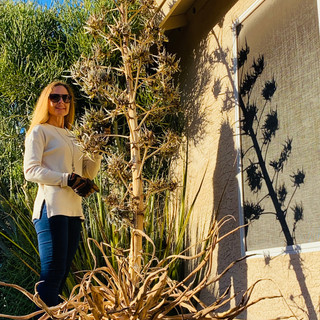
This Aloe ramosissima is surprisingly drought and heat tolerant when situated in afternoon shade.
Smart Planting
Let’s say you have chosen a plant
suitable for the desert climate; every plant - tree, shrub, cactus -EVERY ONE wants to be planted in the right place. In today's exceptionally hot and dry reality, even desert natives like cactus, may not get through the summer without special attention. The best time to plant is fall and winter. Maybe you missed that window
and are planting late in the spring.
Plant your newbie where it will receive morning sun and afternoon shade. If the shade is not readily available (for example, from a tree) you can cover the plant with shade cloth. Remember: more water will not save your plant if it is heat and sun stressed.

Night Blooming Cactus are a fun addition to your desert landscape. Interesting plants that will make it through the summer!
Hydrozoning
Do you use an irrigation system? Hydrozoning—grouping plants with similar water needs— can help reduce water waste. Smart grouping allows for distinct irrigation schedules. For example, cactus and succulents on one
drip zone, water-wise shrubs on another.
Some Desert Wise Establishment & Maintenance Practices
● TREES TREES TREES are essential building blocks in the landscape. They provide shade, shelter for desert animals, and help cool the outdoor space. Not any tree will cut it though. Be very selective! Caesalpinia cacalaco is a winner; winter colour plus heat and drought tolerance!

● Deep water for root establishment and, at the hottest times, water early! Depth over frequency for large plants.
● Well-chosen ground covers can have a
cooling effect. Hardscapes absorb and hold onto heat; that includes artificial turf. Try Rosemary, Chuparosa, Ruellia peninsularis, and Acacia redolens.
● Every plant, particularly cactus (usually more expensive than leafy plants), needs time to acclimate once placed in the ground. It usually takes a full growing season for a plant to be considered established.

A creative solution: this client used a pretty,
light curtain to protect a newly planted vine
from afternoon sun! Anchored umbrellas
strategically placed are another idea.
● “Leave the leaves” is a gardening
initiative which encourages home owners to
stop blowing fallen leaves; instead leave the
leaves in place to act as a natural mulch
and help slow evaporation. And use a rake
instead of the blower; the beneficial insects
will thank you!
Plant Selection: Beauty with Resilience
A drought-tolerant palette can be both ornamental and sustainable. But even desert plant
experts lose a cactus occasionally. Be prepared! Not all of your selections will survive the new
summer heat. You can still have plenty of variety, colour, and texture; but the hardiest plants are
usually from the desert. What a surprise!
● Cactus & Succulents (like Agaves) are the power plants best suited to life in a desert
climate. Remember: when first introduced to your landscape, be prepared to use shade cloth.
● Native grasses are good front yard choices and also for lining paths. Cut them to the
ground every few years to regenerate the plant.
● Perennials are abundant in the low desert. Globe Mallow and Penstemon are a couple
favourites. If you plant them now, in the heat, they may not make it through the summer.
They need time to acclimate and then will return year after year.
● Shrubs like Baja Fairy Duster are no-fail plants! They also provide shade for smaller ground level companions.

This border garden is aesthetically
appealing while supporting
pollinators and local wildlife.
Deborah Pella‐Smith
Dare to Be Desert Garden and
Design
Deborah brings 15+ years of desert
garden experience, backed by a
BA in Environment & Resource
Management, Desert Landscape
School Certificate, horticulture
expertise from the Desert Botanical
Garden, and SMARTSCAPE
training from Maricopa County
Cooperative Extension, University
of Arizona.
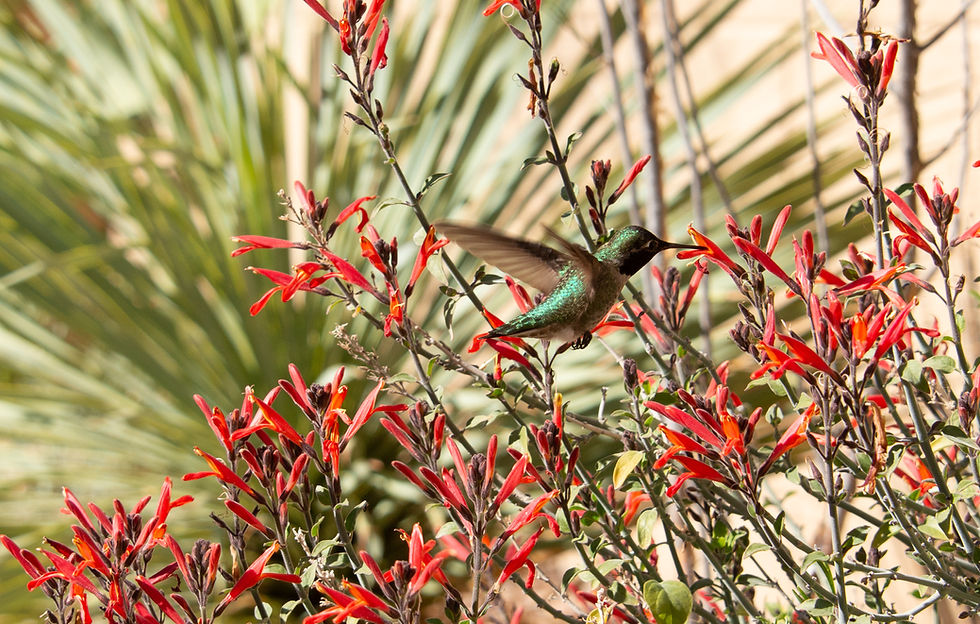
Anna’s Hummingbird
enjoying Chuparosa


Comments